
The Real Cost of Living in Bangkok (2025 Prices from a Resident)
When it comes to lifestyle, Bangkok offers an incredibly vivid urban experience no matter your budget — and with respect to that, the cost of living in Bangkok can vary wildly. While Bangkok is often known for being a ‘cheap’ city, it’s not so black-and-white as that.
The reality is that your cost of living will vary wildly based on your lifestyle choices. For example, I am not a drinker, so my nightlife expenses are very low; however, I am very physically active so I spend a lot on gyms and fitness activities.
Below is an overview of typical expenses for residents, with prices listed in Thai Baht (THB) and approximate conversions to U.S. Dollars (USD) as of March 2025, which will hopefully help you get an idea for what your cost of living in Bangkok could be. When it comes to creating your own personal Bangkok living budget, I suggest you read each section individually and think about where you would fall in that category and then total it up.
At the end of the post, I do give estimates for budget, mid-range, and luxury lifestyles — but at the end of the day, those are subjective categories and don’t always reflect personal expenses and choices that you might make which may seriously impact your actual budget.
1. Accommodation

Rent: A small studio apartment can start from 5,000 THB ($150 USD) per month, though such options may be limited for foreigners as these are largely acquired via connections and are not as easily found online.
Booking through platforms like PropertyHub often starts around 10,000 THB ($300 USD) for a one-year lease. For example, my one-bedroom apartment in an older condo about a 20-minute walk from a central BTS station may cost around 12,000 THB (~$360 USD) monthly.
However, I know plenty of people who rent places for around 25,000 THB (about $730 USD) monthly. It depends on how much space you want, how much you value your amenities, and how close to a major train line you want to be.
Short-term rentals are typically higher — usually at least double the price — but occasional deals can be found on platforms like Facebook Marketplace.
Utilities: Based on my personal experience with a 30-square meter apartment, I find utilities pretty reasonable in Thailand… though my point of comparison is California, where utilities are extortionate.
What I’ve typically found is that electricity is approximately 1,000 THB ($30 USD) per month, water around 100 THB ($3 USD), and high-speed internet services (with smart TV box included) cost about 750 THB (~$22 USD) monthly. Larger apartments may incur higher electricity and water costs, of course.
I also pay 500 THB ($15) every two weeks for cleaning, which is roughly a standard rate.
Initial Setup Costs: It’s common to pay a security deposit equivalent to two months’ rent, though paying an agent is not typically done on the renter’s side (this is usually paid by the landlord). For example, my 12,000 THB rent required a 24,000 THB (~$720 USD) deposit.
2. Food

Groceries: This will range wildly depending on how you shop — and where. Western ingredients at shops like Tops and Villa Market can be costly due to import fees.
I have found through checking out other grocery stores, like MaxValu and Big C, tend to have a larger inventory of local products and are cheaper as a result. As a baseline monthly grocery budget, I’d suggest the range starts from about 4,000 THB (~$120 USD), supplemented with eating out of the house at street food, convenience stores like 7/11, and other dining options.
Eating Out: Street food meals typically range from 50 to 150 THB ($1.50–$4.50 USD). Casual dining generally costs about 150–300 THB ($4.50–$9 USD) for a Thai dish, while Western dishes can be 300–500 THB (~$9–$15 USD), depending on where you dine. High-end venues, especially rooftop bars and fine-dining concepts, will be significantly more expensive.
Delivery Services: Getting a Thai street food dish delivered start around 80 THB ($2.50 USD), generally with an additional 30 THB ($1 USD) delivery fee. Western food delivery begins at approximately 250 THB ($7.50 USD) but can easily go up from there. Tipping delivery drivers 20-50 THB ($0.60-$1.50 USD) is customary. They work hard and often have to wait around for your food to be prepared.
3. Transportation

Public Transportation: As of 2025, the Bangkok Skytrain (BTS) and Metro (MRT) fares range from 17 to 62 THB (~$0.50–$1.80 USD) per trip, depending on distance traveled.
Note that these two systems run separately, with different fares as well as different tickets needed if you switch between the systems, so the actual fare can be even higher than that if you need to take both the BTS and the MRT to get to your destination; as a result, sometimes Grab bikes are both cheaper and faster.
This causes a lot of congestion when it comes to traffic in Bangkok… not to mention PM2.5 pollution as well. There are proposals in place for flat rate fares to make public transit more accessible, but these have yet to be determined.
Taxis and Grab Rides: Short taxi rides start around 100 THB ($3 USD), with longer trips, such as to the airport, costing up to 500 THB ($15 USD) or possibly more depending on the time of day and traffic.
Grab bike services charge approximately 30 THB ($1 USD) for short distances and up to 120 THB ($3.50 USD) for longer rides up to about 30 minutes.
After about 30 minutes of distance, I find that the price is generally comparable between bikes and taxis. In some instances, taxis can even be cheaper!
Motorbike Rentals and Fuel: I don’t recommend renting a motorbike in Bangkok unless you’re already basically an expert at riding one… in crazy traffic. But if you insist…
Renting a motorbike averages around 3,000–5,000 THB ($90–$150 USD) per month. Fuel costs about 40 THB ($1.20 USD) per liter. Parking fees can be around 500 THB (~$15 USD) monthly. For most people, it’s probably cheaper to just use Grab.
4. Healthcare
Health Insurance: International health insurance plans, such as SafetyWing or Genki, typically cost about $150 USD per month for a comprehensive plan that covers routine care and doctors visits as well as emergent care or $50 USD per month for an emergency-only plan (covers hospitalizations). Thai health insurance warrants an entire post of its own!
Doctor’s Visits: While this can depend wildly, consultations range from 1,000 to 4,000 THB (~$30–$120 USD), varying by clinic and medical needs. For a basic skin consultation, I’ve paid 1,000 THB and for a mental health consultation with a psychiatrist I’ve paid 3,000 THB.
Pharmacies: Basic medications are affordable, with items like migraine medication costing around 50 THB (~$1.50 USD).
Emergency Care: Emergency treatments can be costly; for instance, a friend’s food poisoning treatment totaled approximately 12,000 THB (~$360 USD). Having comprehensive health insurance is advisable so you don’t have to field unwieldy out of pocket expenses like this one!
Massages: Getting frequent Thai massages is one of the best parts about living in Thailand! I like to get a massage at least once every two weeks.
Massage prices vary, but you can get a Thai massage or foot massage starting around 250 THB ($7.50) in most areas; the prices are about double if you want to get a specialty massage, like aromatherapy or oil massage.
5. Utilities
Electricity, Water, Internet: As previously detailed, expect around 1,000 THB ($30 USD) for electricity, 100 THB ($3 USD) for water, and 750 THB (~$22 USD) for internet monthly.
Mobile Phone Costs: You can get some really good deals if you find the right long term package. For example, a six-month unlimited data package with DTAC costs around 1,800 THB ($54 USD), averaging 300 THB ($9 USD) per month.
Faster internet packages through DTAC or AIS are usually offered regularly at about 300 THB (~$9 USD) monthly, though sometimes these packages will have data caps (usually around 50 GB per 30 days — which is good enough for most people’s use, but won’t work if you want to hotspot a lot as well).
6. Entertainment and Leisure

Gym Memberships: Luxury gym memberships like Virgin Active average around 3,800 THB ($115 USD) per month. There are also smaller specialized gyms like climbing gyms — I pay another 1,600 THB ($50 USD) per month for mine.
Personally, I spend a lot on fitness, which I justify in part because I scrimped on having fewer amenities in my condo… but also because physical activity keeps me sane and I like having a place to go that’s outside of my condo area to get me out and about for the day.
Standalone fitness classes and day passes range from 400 to 1,000 THB (~$12–$30 USD) per session, depending on what you’re interested in.
Movies and Entertainment: Wednesday “Movie Day” movie tickets, as well as movie tickets at smaller independent cinemas like my personal favorite, House Samyan, are a great deal at a cost of about 150 THB ($4.50 USD).
Major chains like Major Cineplex and SF charge 250–350 THB ($7.50–$10.50 USD) for regular tickets outside of Wednesday “Movie Day”, with weekend prices typically being set a little higher. Snacks can be pricy, though — usually an extra 250 THB ($7.50) for a drink and soda combo.
There are also some really fancy luxury movie theaters where seats can go for up to 1,000 THB (~$30 USD) for a seat, but these are the exception to the rule and usually include some sort of novelty perk like getting to watch a movie from bed or having food included in the ticket price.

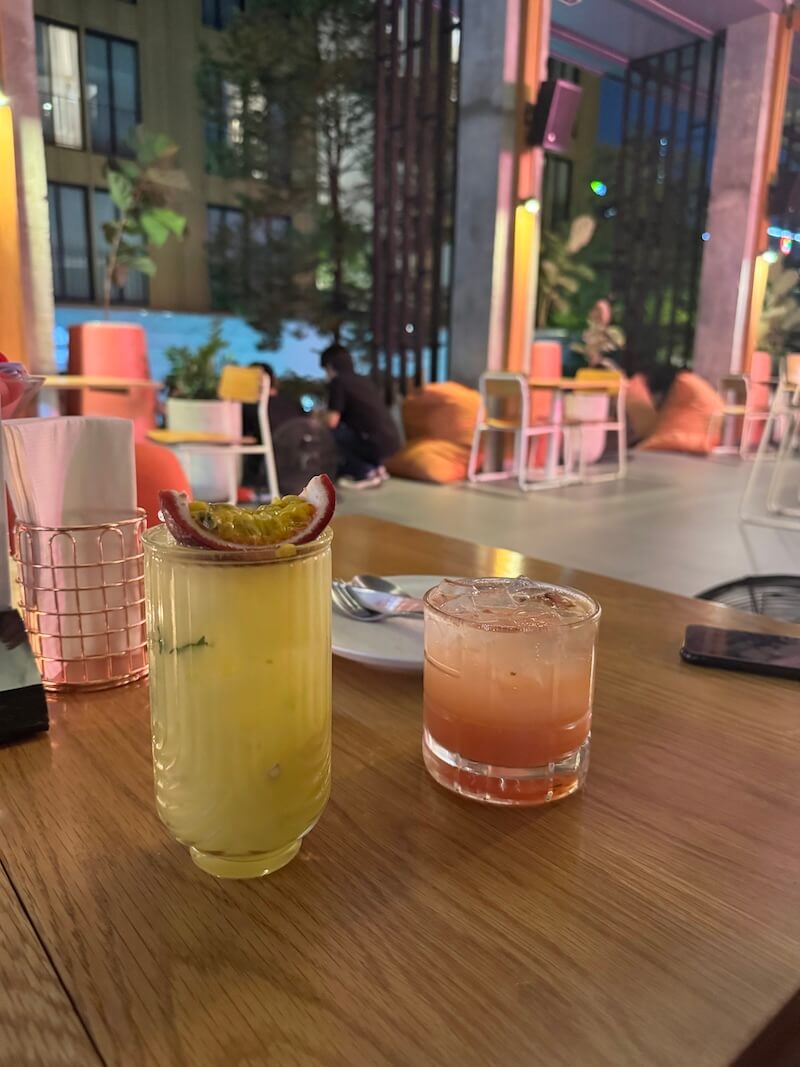
Nightlife: Mocktails at bars are around 200 THB ($6 USD), with cocktails starting at 300–400 THB ($9–$12 USD). But this is for a standard bar; if you want to go to a rooftop bar, expect to pay way more.
Depending on where you go, cover charges for clubs can be up to 1,000 THB (~$30 USD), which will sometimes include drink tickets and sometimes not. My favorite drag bar, for example, charges about 500 THB (~$15 USD) entry fee, but that includes two 200 baht drink tickets.
7. Shopping

Clothing: Secondhand markets and wholesale areas within malls and in markets around Bangkok generally have items for 100–500 THB (~$3–$15 USD) apiece.
Of course, the larger malls have brands like H&M and Uniqlo, which will have prices similar to global standards, so you’ll neither save nor splurge shopping in Thailand compared to other destinations.
Luxury brands are also available in Bangkok but usually at quite a high markup, and what’s considered luxury here includes some of my favorite brands — like Birkenstocks! — so certain products can randomly be a lot more expensive than you might think.
Household and Personal Items: Stores like Boots and Watsons carry personal care and household items like you’d find back home.
For me personally, I’d estimate monthly expenses around 1,000 THB (~$30 USD) for everyday items like basic toiletries and laundry detergent, but note that this number is excluding any luxury make-up purchases or anything of that nature.
Electronics and Gadgets: Imported electronics can be more expensive than local brands. For instance, a Thai-branded instant pressure cooker can cost 1,000 THB ($30 USD) compared to 4,500 THB ($135 USD) for a branded Instant Pot.
When I buy electronics, I usually use Lazada to find the cheaper options; Shopee is another similar option. If I am buying electronics / home goods in person, I like HomePro.
Final Thoughts:
The cost of living in Bangkok offers flexibility depending on your lifestyle choices. You can live comfortably on a moderate budget by embracing local food, transportation, and housing options.
However, for those who prefer certain Western conveniences or luxury experiences, costs can rise significantly. Understanding these expenses and making values-based choices will help you get the most bang for your buck in Bangkok.
To summarize, here are some expected final monthly costs of living (excluding health insurance)… but it can easily be more if you, say, are a heavy partier or big drinker, or are a huge foodie, or choose a fancy place to live!
- Extreme Budget Lifestyle: 15,000 THB (~$450 USD) — this is someone who found the cheapest possible rental unit, eats mostly street food or cooks at home using Thai ingredients, and streamlines their going-out expenses to the bare minimum. This is not the most comfortable lifestyle, but it’s technically doable.
- Mid-Range Lifestyle: 30,000 THB (~$900 USD) — this is someone who has a cheaper and less luxurious apartment, eats out at street food and the occasional Western dining option, and goes out in moderation. This is a pretty comfortable lifestyle and is fairly easily doable as long as you watch your entertainment, drinking, and dining expenses.
- Luxury Lifestyle: 60,000 THB (~$1,800 USD) — this is someone who has a luxury (but not massive) condo, dines out regularly or cooks Western food at home, and goes out on weekends. This is a very nice lifestyle and you can stay within this threshold as long as you aren’t a big spender when it comes to nightlife and dining out. As affordable as Bangkok can be, if you’re regularly dropping 500 THB per cocktail and having